360 liposuction
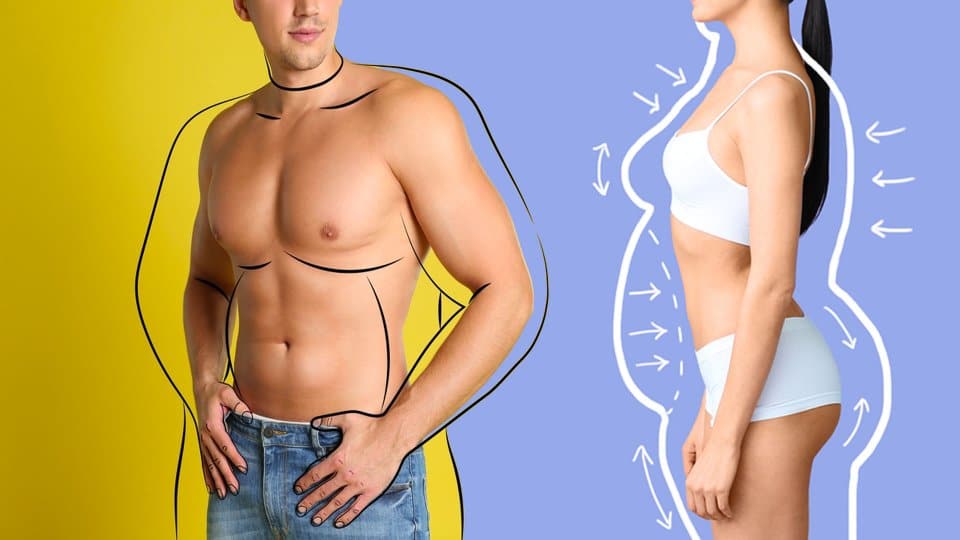
360 liposuction is a body-contouring approach that can be considered with Dr. Ömer Parıldar when localised fat extends around several parts of the torso rather than remaining limited to one isolated area. Instead of looking only at the abdomen, treatment planning may include the waist, flanks, lower back and selected areas of the upper or lower torso so that the body is evaluated as a continuous three-dimensional shape. The purpose is not simply to remove as much fat as possible. Careful planning focuses on proportion, transitions between neighbouring areas, skin quality and the patient’s natural anatomy.
Some patients reach a stable weight yet continue to notice fullness around the waistline or back. The front of the abdomen may look relatively flat while the flanks remain prominent, or the lower back may create folds that affect the overall silhouette. Treating only one small area may not always address these relationships.
A circumferential approach therefore considers how the front, sides and back of the torso work together. However, not every patient needs every region treated, and the term should not be interpreted as a promise that the entire body will be aggressively suctioned.
During consultation, Dr. Ömer Parıldar evaluates where removable subcutaneous fat is located, how elastic the skin is and whether loose skin or abdominal wall changes are contributing to the appearance.
360 liposuction: What Does the Term Mean?
360 liposuction generally refers to liposuction planned around the circumference of the torso rather than one isolated surface. The exact treatment zones can vary according to anatomy.
The abdomen may be included when there are localised fatty deposits across the upper or lower abdominal region.
The flanks, sometimes described as the sides of the waist, are frequently considered because their shape strongly affects how narrow or defined the waist appears from the front and back.
The lower back may also be assessed. Some patients store fat around the area above the buttocks or around the back of the waist, which can influence the transition between the torso and hips.
Selected upper-back areas may occasionally be considered as part of a broader plan when fatty folds are present.
The term does not mean that every square centimetre around the torso must be treated. A responsible plan is selective.
If one area is naturally lean, removing additional fat simply to make the operation appear more comprehensive could create irregularities or an unnatural contour.
Dr. Ömer Parıldar assesses each zone individually and then considers how treatment of one area may affect the appearance of the neighbouring region.
This three-dimensional planning is particularly important because a body can look different from the front, side and back.
A waist that appears balanced from the front may still have significant fullness from the back, while aggressive treatment of one side could create a mismatch with another untreated area.
Who May Be a Suitable Candidate?
Candidates are generally adults with localised subcutaneous fat, reasonably stable body weight and realistic expectations about what contour surgery can change.
The procedure should not be regarded as a treatment for obesity.
Patients seeking major weight reduction need a different medical approach. Liposuction changes selected contours; it does not address the metabolic or health consequences associated with obesity.
Skin quality is also important.
When skin has strong elasticity, it may adapt more effectively after the underlying fat volume is reduced.
When there is significant skin laxity, especially after pregnancy or major weight loss, fat removal alone may not create the intended result.
A patient may have enough loose skin that reducing the volume underneath makes the laxity more noticeable.
General health must also be considered.
Medical conditions affecting circulation, wound healing, anaesthesia or blood clotting may influence suitability and treatment planning.
Medication, supplements, allergies and previous surgical history should all be discussed honestly.
Smoking and nicotine use are especially relevant because they can affect blood flow and healing.
A consultation should also establish whether the patient’s weight is relatively stable.
Large future weight changes can alter the contour achieved through surgery.
360 liposuction: Which Areas Can Be Treated?
With 360 liposuction, the treatment map is created according to the patient’s distribution of fat rather than a rigid checklist.
The abdomen is often one of the main regions assessed. Some patients have central lower-abdominal fullness, while others store more fat across the upper abdomen.
The waist is another important area because the relationship between the ribs, waist and hips contributes strongly to overall body proportion.
Flank fullness can make the waist appear straighter or wider even when the front of the abdomen is not particularly prominent.
The lower back influences the body from both side and rear views.
Reducing selected fatty deposits in this area may create a clearer transition between the back, waist and upper buttock region.
Upper-back folds may be assessed separately when they contribute to the patient’s concern.
The treatment does not need to include every region equally.
One patient may require more correction at the flanks and lower back, while another has greater abdominal fullness.
This is why planning by body area is more useful than asking for a predetermined quantity of fat to be removed from each zone.
Dr. Ömer Parıldar can explain which areas are contributing most to the overall contour and which ones may not benefit from treatment.
Fat Beneath the Skin Is Not the Only Cause of Abdominal Fullness
Liposuction targets subcutaneous fat, which is the layer located beneath the skin.
Not all abdominal fullness comes from this tissue.
Visceral fat is located deeper inside the abdominal cavity around the internal organs. It cannot be removed through cosmetic liposuction.
This distinction can significantly affect what result is possible.
A patient may have a relatively modest amount of removable fat but still have a rounded abdominal profile because of deeper internal fat.
Abdominal wall structure can also contribute.
Pregnancy or substantial weight change may be associated with separation or weakening of the abdominal muscles.
Removing fat cannot repair the muscle wall.
Loose skin is another separate issue.
If a patient has significant hanging or folded abdominal skin, a skin-removal procedure may need to be discussed instead of, or together with, liposuction.
During consultation, identifying whether the visible concern is caused by fat, skin, abdominal wall structure or a combination of these factors is essential.
Without this distinction, a patient may expect liposuction to correct a problem that the technique cannot directly treat.
How Body Proportions Are Planned
Body contouring should not be based simply on making every treated area as small as possible.
The waist needs to remain proportionate to the chest, pelvis and hips.
The lower back should transition naturally toward the buttocks.
The abdomen should not appear excessively hollow compared with untreated areas.
For this reason, Dr. Ömer Parıldar evaluates the body from several angles.
Standing examination is particularly useful because gravity changes how fatty tissue and skin are distributed.
The natural skeletal structure also matters.
Rib-cage width, pelvic width and muscle structure cannot be changed through fat removal.
A person with a naturally wider rib cage may have a different final waist proportion from someone with a narrower frame, even when similar amounts of fat are removed.
Patients sometimes bring photographs showing a very narrow waistline.
Such images can be useful for communicating aesthetic preferences, but they should not be treated as anatomical templates.
The treatment must work with the patient’s own body structure.
360 liposuction: How Is the Procedure Performed?
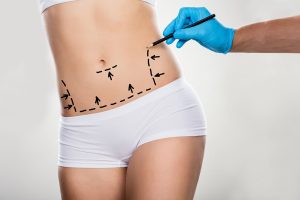
360 liposuction is usually performed through several small access incisions positioned according to the planned treatment areas. A specialised fluid may be introduced into the fatty tissue before suction. This can assist the surgical process and help manage bleeding and discomfort.
A thin cannula is then passed through the incisions into the subcutaneous fat.
The surgeon removes selected fatty tissue through controlled movements rather than simply suctioning continuously from one point.
Different angles may be used so that the remaining layer transitions smoothly across the treated area.
The patient may need to be repositioned during surgery so that the back, sides and front can be treated safely and accurately.
The amount removed is determined by several factors, including the patient’s anatomy, overall health and the number of areas involved.
More fat removal is not automatically associated with a better contour.
Excessive removal can increase the risk of irregularities and other complications.
The treatment objective should therefore remain controlled reshaping.
Anaesthesia requirements depend on the extent of surgery and individual medical factors.
A larger circumferential procedure generally requires more planning than treatment of one small area.
At the end of surgery, the small access incisions are managed according to the chosen technique and compression garments may be applied.
Skin Elasticity Can Change the Result
Skin elasticity is one of the most important factors in torso contouring.
After fat is removed, the skin needs to adapt to the new volume beneath it.
Patients with strong skin elasticity may experience a smoother contraction over time.
Patients with significant laxity can have a different outcome.
Pregnancy, major weight loss, repeated weight changes, ageing and individual genetics can all reduce skin elasticity.
Stretch marks may also suggest that the skin has undergone substantial stretching, although they do not alone determine whether liposuction is suitable.
When the skin is loose, Dr. Ömer Parıldar may discuss whether another contouring procedure would provide a more appropriate correction.
For example, significant abdominal skin excess may require an abdominoplasty rather than relying on fat reduction alone.
Similarly, loose skin extending around the lower torso may lead to discussion of more extensive body-contouring options.
The key is to distinguish between reducing volume and removing redundant skin.
These procedures can complement each other in selected patients, but they do different jobs.
What Happens Immediately After Surgery?
Swelling is expected after torso liposuction.
During the first days, the body can retain enough fluid that the treated area does not immediately look smaller.
Bruising, tenderness and temporary firmness can also occur.
Some areas may feel numb or unusually sensitive.
These early changes generally evolve as healing progresses.
Compression garments are commonly used after treatment.
They can support the tissues and help control swelling, but they should be worn according to the instructions provided.
A garment that is excessively tight can create discomfort and pressure problems.
Patients should not attempt to accelerate their result by adding additional layers of compression without medical advice.
Gentle walking is generally introduced when medically appropriate.
Remaining completely immobile for prolonged periods is not recommended because early movement supports circulation.
However, gentle walking is very different from returning to normal training.
Exercise and strenuous activity require more time.
Recovery After Circumferential Treatment
Because several surfaces of the torso can be involved, recovery may feel different from limited-area liposuction.
Sitting can place pressure on the back and waist.
Lying in certain positions may initially be uncomfortable.
Bending and twisting can also feel restricted because swelling extends around the torso rather than remaining in one small location.
Prepare comfortable clothing before surgery.
Loose garments can be easier to wear over compression clothing and swollen areas.
Arrange help with demanding household tasks if necessary.
Although the incisions themselves are small, the internal treated surface can be extensive.
This is why patients should not judge the scale of recovery according to incision length alone.
Follow-up examinations allow Dr. Ömer Parıldar to evaluate swelling, skin adaptation and incision sites.
Patients should attend these reviews even when they feel well.
Swelling and the Development of the Final Contour
The result develops progressively.
A large amount of swelling may improve during the first weeks, but residual swelling can last longer.
Some areas may settle faster than others.
The waist could begin to look more defined before the lower abdomen has fully softened, or one side may temporarily appear slightly different from the other.
Firm areas can occur during healing.
The skin and deeper tissues need time to adapt after surgery.
For this reason, patients should avoid making frequent day-to-day comparisons.
Photographs taken at planned intervals can provide a more useful picture of progress.
The final contour should be evaluated after adequate healing rather than during the initial swollen period.
When 360 liposuction is planned around several areas, changes in proportion may also become clearer gradually as all treated regions settle together.
When Can You Return to Work?
The return-to-work schedule depends on the extent of treatment and the physical requirements of the job.
Someone who works remotely at a computer may be able to resume limited duties earlier than a person whose job requires lifting, bending or prolonged physical effort.
However, desk work can still be uncomfortable when the torso is swollen.
Long periods of sitting may place pressure around the waist and back.
Commuting also needs to be considered.
Driving, public transportation and carrying bags all require more movement than simply sitting at a desk.
Discuss your actual working routine with Dr. Ömer Parıldar.
This makes it possible to plan recovery according to your responsibilities rather than relying on a universal number of days.
It can be helpful to arrange flexible hours during the first period back at work.
Returning to the Gym
Patients often want to know when they can return to exercise.
Walking generally comes first.
More demanding cardiovascular exercise is introduced later.
Resistance training involving the abdomen, back or lower body can place additional strain on treated areas and may need a longer pause.
Even when incisions look healed externally, internal tissues are still recovering.
Exercise should therefore return in stages.
Patients who regularly lift heavy weights should mention this specifically during consultation.
A light treadmill walk and a heavy squat session are very different forms of activity.
Swimming also requires the small incisions to be sufficiently healed before entering pools or other water.
The objective is not to return to the gym as quickly as possible.
The objective is to return without creating unnecessary problems during the healing period.
Can the Fat Come Back?
Fat cells removed during liposuction do not regenerate in the same way as untreated cells simply because the patient eats more.
However, remaining fat cells throughout the body can enlarge if significant weight gain occurs.
The treated areas can therefore become fuller again.
Weight gain may also occur in other body regions, changing overall proportions.
Maintaining a relatively stable weight is important for preserving the contour.
This does not require pursuing extreme diets after surgery.
A sustainable lifestyle is more useful than repeated cycles of rapid loss and regain.
Patients should see the procedure as refinement of an existing body shape rather than protection against all future weight changes.
Pregnancy can also change the abdomen and waist after surgery.
Patients planning pregnancy in the near future may want to discuss timing during consultation.
Possible Risks and Complications
Every surgical procedure has potential risks.
Liposuction can be associated with bleeding, infection, fluid accumulation, persistent swelling and delayed healing around access incisions.
Temporary numbness can occur.
Some patients develop prolonged changes in sensation.
Contour irregularities are another consideration.
The skin surface can appear uneven if the remaining fat layer is inconsistent or if skin contracts unevenly.
Natural pre-existing asymmetry can also remain.
Seroma refers to fluid collecting beneath the skin and may sometimes require treatment.
Skin colour changes and prolonged firmness are also possible.
Blood clots are an important general surgical risk, particularly when operations are longer or mobility is reduced.
Anaesthetic complications can occur as well.
Rare but serious complications associated with extensive fat removal must also be included in the informed-consent discussion.
Patients should understand that increasing the number of areas treated can increase the scale of the operation.
Safety must therefore take priority over attempting to remove the greatest possible volume in one session.
When Should You Seek Medical Assistance?
Your postoperative instructions should explain which symptoms are expected and which require assessment.
Bruising, tenderness and swelling can be normal during early healing.
However, rapidly increasing swelling, severe worsening pain, unusual wound discharge or significant redness should be reported.
Fever may also require medical assessment.
A new painful swelling affecting one leg can be a warning sign of a blood clot and requires urgent evaluation.
Sudden shortness of breath, chest pain, fainting or severe breathing difficulty requires emergency medical attention.
Do not wait for a routine appointment when symptoms suggest an emergency.
Patients travelling for surgery should know in advance where they would obtain urgent medical care if necessary.
Aftercare planning is part of the operation rather than an optional addition.
360-Degree Contouring After Significant Weight Loss
Patients who have lost a large amount of weight need particularly careful assessment.
In these individuals, apparent torso fullness may partly be created by folds of loose skin rather than significant fat.
Removing more fat from beneath already loose skin may not provide the desired result.
Some patients may instead benefit from skin-removal surgery or a combined plan.
The abdominal area may require a tummy tuck, while circumferential loose skin can sometimes require more extensive lower-body contouring.
The exact procedure depends on the pattern of tissue excess.
If your weight loss followed bariatric surgery, nutritional condition may also need evaluation before elective surgery.
Protein intake, vitamins and minerals can affect wound healing.
Dr. Ömer Parıldar can assess whether liposuction has a meaningful role or whether another form of body contouring deserves greater consideration.
Planning Treatment in Istanbul
Patients travelling to Istanbul for 360 liposuction should organise their stay around medical care rather than treating the operation as a short cosmetic trip.
If you are coming from another city or country, explain this when arranging your consultation.
Ask how long you are expected to remain locally after surgery.
Early postoperative examinations may be required before a longer journey is appropriate.
Long-distance travel needs particular consideration because surgery and prolonged immobility can both increase blood-clot risk.
Do not select a return flight before discussing the likely recovery timetable.
Carrying heavy luggage may also be restricted.
Travelling with someone who can assist with transportation and bags can make the early recovery period easier.
Before leaving Istanbul, make sure you know how follow-up will continue and what should happen if an in-person assessment becomes necessary after you return home.
How Is the Cost Determined?
The cost depends on the areas included, the extent of treatment and the medical resources required.
A limited waist procedure is different from circumferential treatment involving the abdomen, flanks and several regions of the back.
Operating time, anaesthesia, hospital arrangements and postoperative garments can all influence the overall plan.
Medical tests and scheduled follow-up may also be included depending on the treatment structure.
Patients should request a clear explanation of what is included in the proposed quotation.
Do not assume that the phrase “360” means every possible torso area is automatically covered.
The surgical plan should identify the exact regions that are being considered.
If another procedure is recommended at the same time, clarify whether it forms part of the same treatment estimate.
A cost discussion is most useful after the anatomy has been assessed and the appropriate extent of surgery has been established.
Questions to Ask During Consultation
Ask which areas of your torso are actually contributing to the contour concern.
Find out whether the abdominal fullness is mainly subcutaneous fat or whether deeper fat, skin laxity or abdominal wall structure is involved.
Ask how your skin is expected to respond after fat removal.
Discuss how the waist, abdomen and back will be balanced rather than focusing on one isolated measurement.
Ask how extensive the operation is expected to be and what type of anaesthesia will be used.
Find out whether a compression garment will be required and how long it should be worn.
Ask when you can return to work, driving and exercise.
If you have previously undergone weight-loss or body-contouring surgery, make sure this is discussed.
You should also understand what result is realistically possible with your natural rib cage, pelvis and muscle structure.
A consultation should clarify these issues before any surgical date is selected.
Dr. Ömer Parıldar
For patients considering 360 liposuction, Dr. Ömer Parıldar evaluates the abdomen, waist, flanks and back as connected parts of the same torso rather than viewing each area in isolation. Fat distribution, skin elasticity, natural skeletal proportions, previous weight changes and general health all contribute to treatment planning.
You do not need to decide in advance exactly which areas should be treated.
Begin by explaining what you notice from the front, side and back and which proportions you would most like to change.
An individual consultation can determine whether circumferential fat removal is suitable, whether some regions should be left untreated and whether loose skin or another anatomical factor requires a different approach.
The goal is controlled body contouring shaped around your own anatomy rather than maximum fat removal.
Contact Dr. Ömer Parıldar
Telephone: +90 546 198 81 35
WhatsApp: +90 546 198 81 35
Email: info@dromerparildar.com
Address:
Basınköy, Florya Cd. No:15-17
34153 Bakırköy / İstanbul
Contact Dr. Ömer Parıldar to arrange an individual consultation and discuss a carefully planned torso-contouring approach based on your body proportions, skin quality and treatment expectations.
İlgili bağlantı: https://www.dromerparildar.com/iletisim/
İlgili bağlantı: https://www.instagram.com/dromerparildar/
Articoli correlati
Scopri altri approfondimenti dedicati ad argomenti simili.