Forehead botox
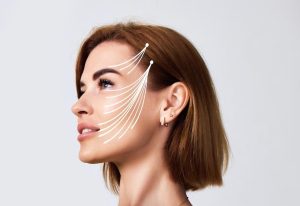
Forehead botox can be considered with Dr. Ömer Parıldar when horizontal forehead lines become noticeable during facial expression or begin to remain visible even when the face is relaxed. These lines usually develop because the forehead muscles repeatedly contract when the eyebrows are raised. Over time, skin elasticity changes and the creases created by repeated movement can become more persistent. Treatment planning should therefore focus not only on the lines themselves but also on eyebrow position, muscle strength, facial symmetry and the way the upper face moves naturally.
Botulinum toxin treatment works by temporarily reducing selected muscle activity. The goal is not necessarily to eliminate every movement in the forehead. A carefully planned treatment aims to soften unwanted lines while maintaining a natural facial expression and preserving an appropriate relationship between the forehead, eyebrows and eyes.
Dr. Ömer Parıldar evaluates the forehead while the patient is relaxed and while making different expressions. This makes it possible to understand which muscles are producing the lines, whether one side moves more strongly than the other and whether eyebrow position needs particular attention.
Why Do Horizontal Forehead Lines Develop?
Horizontal forehead lines are closely connected to the frontalis muscle.
This muscle lifts the eyebrows. Every time a person raises the eyebrows, the forehead skin folds horizontally.
When the skin is young and elastic, these lines may disappear almost completely after the muscle relaxes.
As skin characteristics change with age, repeated movement can gradually leave visible creases even when the forehead is at rest.
Genetics also influence the pattern.
Some people naturally have strong forehead movement and develop lines relatively early. Others have weaker muscle activity and notice fewer horizontal lines despite being the same age.
Eyebrow position is another factor.
A person with naturally lower eyebrows may use the forehead muscles frequently to keep the brows elevated. Treating the forehead too aggressively in such a patient could make the eyebrows feel heavier.
For this reason, a line should not be treated independently from the muscle producing it.
Sun exposure, smoking and natural changes in skin quality can make lines more noticeable as well, but botulinum toxin primarily acts on muscle activity rather than directly correcting skin texture.
If a crease is already deep at rest, reducing movement can soften its appearance over time, but the line may not disappear completely after a single treatment.
Forehead botox: Who May Consider Treatment?
Forehead botox may be considered by adults who are bothered by horizontal expression lines and would like a temporary, non-surgical approach to reducing their visibility.
The treatment is often requested by people whose forehead looks smooth at rest but develops strong creases when the eyebrows are raised.
It can also be discussed when lines have started remaining visible without active expression.
Suitability depends on more than age.
A younger person can have strong forehead movement and noticeable lines, while an older patient may have relatively mild dynamic creasing.
The position of the eyebrows is especially important.
Some patients unconsciously use the forehead muscle to compensate for upper-eyelid heaviness or low eyebrow position. Reducing this muscle activity too much may change the way the upper face feels or looks.
Previous botulinum toxin treatment should also be discussed.
Tell Dr. Ömer Parıldar when you last received treatment, which areas were injected and whether you experienced any unwanted effects such as excessive eyebrow lowering, asymmetry or an unnatural expression.
Medical history matters as well.
Pregnancy, breastfeeding, neuromuscular conditions, medication use and previous reactions to injectable treatments should be discussed before treatment.
A consultation allows these factors to be reviewed before deciding whether treatment is appropriate.
Facial Expression Should Be Assessed Before Injection
The forehead is a dynamic area.
A photograph of the relaxed face does not provide enough information to plan treatment.
During assessment, you may be asked to raise the eyebrows, frown and relax the forehead.
These movements show how strongly different muscles contract.
One side may naturally be more active than the other.
The eyebrows may also start at slightly different heights.
This natural asymmetry should be documented before treatment because botulinum toxin can modify movement but cannot make the entire face mathematically symmetrical.
Dr. Ömer Parıldar also considers how the forehead interacts with the muscles between the eyebrows.
Treating only one region without considering the surrounding muscle balance can influence eyebrow position.
This is why injection placement and dose need to be individualised.
The patient should explain what kind of result they prefer.
Some people want a noticeable reduction in movement.
Others want the forehead lines softened while retaining clear eyebrow movement and facial expression.
Neither preference should be assumed automatically.
What Does Botulinum Toxin Actually Do?
Botulinum toxin reduces communication between selected nerves and muscles at the treatment site.
As muscle activity decreases, the skin folds created by repeated movement become less pronounced.
The effect is temporary.
Muscle activity gradually returns as the treatment wears off.
This temporary nature allows future treatment to be adjusted according to how the face changes over time.
It is important to understand that the product does not fill a wrinkle.
Dermal fillers and botulinum toxin work in different ways.
A filler adds volume to selected tissues.
Botulinum toxin reduces muscle contraction.
For horizontal forehead lines caused mainly by expression, reducing muscle activity is the relevant mechanism.
If a deep line remains strongly visible even after the muscle relaxes, additional skin-quality concerns may also need separate assessment.
Dr. Ömer Parıldar can explain whether the line is primarily dynamic, already static or influenced by both movement and skin quality.
Forehead botox: How Is Treatment Planned?
Forehead botox is planned according to muscle strength, forehead height, eyebrow position, facial symmetry and the patient’s preferred degree of movement.
There is no single injection map that should be copied from one patient to another.
The frontalis muscle can be stronger in certain areas.
Some patients have a relatively tall forehead, while others have less distance between the eyebrows and hairline.
The brow position may be naturally high, low or asymmetric.
These differences affect where treatment can be placed safely and how much reduction in movement is appropriate.
A patient with naturally low eyebrows may need a more conservative approach to the lower forehead.
Someone with stronger central forehead movement may require a different distribution from a person whose lines extend broadly across the entire forehead.
During consultation, Forehead botox should be discussed in relation to the whole upper face rather than as a treatment for isolated horizontal marks.
Dr. Ömer Parıldar may also assess the frown area between the eyebrows if its movement is influencing the overall eyebrow balance.
The final plan should aim to soften lines while preserving a natural relationship between expression and facial structure.
Does Treatment Make the Forehead Completely Frozen?
It does not have to.
The degree of movement reduction depends on the treatment plan.
Some patients prefer substantial reduction in forehead movement.
Others want enough muscle activity to retain expressive eyebrow motion.
A natural result does not necessarily mean that no change is visible.
It means that the treated forehead remains consistent with the patient’s facial character.
Excessive weakening can make the forehead feel heavy, particularly in patients who rely strongly on the frontalis muscle to elevate the eyebrows.
Conversely, treatment that is too limited may not provide enough improvement for someone with very strong lines.
Dose and placement therefore need to balance these considerations.
Tell Dr. Ömer Parıldar if you previously felt that your forehead looked too still after treatment elsewhere.
Likewise, mention if earlier treatment wore off very quickly or left specific areas moving much more than others.
Previous experience can provide useful information for future planning.
What Happens During the Appointment?
The treatment appointment is generally relatively short.
Before injection, the forehead is examined while relaxed and during expression.
The skin is cleaned, and the planned injection points are identified according to the muscle pattern.
A fine needle is used to place small amounts of botulinum toxin into selected areas.
Patients usually describe the injections as brief pinching or stinging sensations.
A small raised area can temporarily appear at an injection point immediately afterward.
Minor redness is also possible.
These early changes usually settle quickly.
There is no surgical incision and therefore no surgical scar.
However, the fact that treatment is minimally invasive does not mean that planning is unimportant.
Small differences in injection position or muscle balance can influence eyebrow movement and facial expression.
The treatment should therefore be carried out according to individual anatomy rather than simply following a fixed set of forehead points.
When Does the Effect Begin?
The result is not immediate.
Muscle activity begins to decrease gradually after treatment.
Patients may start noticing a change within the first several days, while the effect continues developing afterward.
The final degree of muscle relaxation should therefore not be judged on the day of injection.
One side may occasionally appear to respond slightly faster during the early period.
This does not necessarily represent the final balance.
Allowing adequate time before evaluating the result makes the assessment more meaningful.
A follow-up can be useful when appropriate, particularly for first-time patients or when asymmetry was present before treatment.
The objective is not to keep adding product during the first few days simply because every line has not disappeared immediately.
The medication needs time to produce its intended effect.
How Long Does the Result Last?
Botulinum toxin treatment is temporary.
The duration varies between individuals.
Muscle strength, metabolism, treatment area, previous treatment history and dose can all influence how long the effect remains noticeable.
Over time, the treated muscle gradually begins moving more strongly again.
Forehead lines then start becoming more visible during expression.
Repeat treatment can be considered when the previous effect has sufficiently diminished and the patient still wants continued reduction in movement.
Treatment intervals should be discussed individually rather than selected according to a fixed calendar used for every patient.
A patient who retains a satisfactory result does not need another treatment simply because a certain number of months has passed.
Likewise, repeatedly treating too frequently should not be used as a strategy to maintain complete absence of movement.
Dr. Ömer Parıldar can evaluate the forehead at follow-up and discuss timing according to the returning muscle activity.
Forehead botox: Aftercare and Daily Routine
Forehead botox generally requires little interruption to everyday life, but patients should still follow the aftercare advice provided for their individual treatment.
Small injection marks or mild redness can be visible shortly afterward.
Minor bruising is possible, although not every patient develops it.
Avoid repeatedly pressing, rubbing or massaging the injected areas unless specifically advised.
Skincare and makeup instructions should follow the recommendations provided at the appointment.
Patients should also ask about exercise, sauna use and other activities if these form part of their normal routine.
The important point is to follow the instructions given for the actual treatment rather than relying on conflicting advice from different online sources.
If the forehead feels different during the first few days, remember that muscle activity is changing gradually.
Do not repeatedly test the result by raising the eyebrows forcefully throughout the day.
The treatment will continue developing without the need to monitor every movement.
Possible Side Effects
Injectable treatment can cause temporary local effects.
Redness, tenderness, mild swelling or small bruises can occur around injection points.
A temporary headache is also reported by some patients after treatment.
Changes in eyebrow position are possible.
If the treatment affects the balance of the forehead muscles differently than intended, one eyebrow can appear higher or lower.
An unusually arched lateral eyebrow can also occur in some cases.
Eyelid or eyebrow drooping is another recognised potential complication.
This is one reason why injection position and individual anatomy are important.
Temporary asymmetry may also occur.
More serious reactions are uncommon but need appropriate medical assessment if they occur.
Patients should provide accurate information about medications, medical conditions and previous injectable treatments before the procedure.
Any unexpected or concerning symptom after treatment should be discussed with the treating clinician.
Can Botulinum Toxin Prevent Future Forehead Lines?
Reducing repeated muscle contraction can decrease the folding forces applied to the forehead skin during the period when the treatment is active.
This can help prevent dynamic lines from becoming as deeply expressed during that time.
However, treatment does not permanently stop skin ageing.
Collagen changes, sun exposure, genetics and normal ageing continue.
The term preventive treatment should therefore be understood realistically.
It can temporarily reduce repetitive movement, but it does not guarantee that permanent forehead lines will never develop.
Patients should not feel that they must begin injections at a particular age to avoid irreversible ageing.
Treatment should be based on whether existing muscle movement and lines actually bother the individual.
Can Men Have Forehead Treatment?
Yes.
Men can consider botulinum toxin for forehead lines just as women can.
However, treatment planning may differ because muscle strength and eyebrow shape can differ considerably.
Many male patients have stronger forehead muscles.
The natural eyebrow position may also be lower or straighter.
Trying to reproduce the same injection pattern used for another facial structure can create an unwanted change in expression.
Some men want their lines softened without creating a highly elevated or curved eyebrow appearance.
Communicating this preference is useful during consultation.
Dr. Ömer Parıldar evaluates the individual muscle pattern rather than treating the forehead according to gender alone.
The same principle applies to every patient: anatomy and desired expression guide the treatment.
What If One Eyebrow Is Higher Than the Other?
Natural eyebrow asymmetry is extremely common.
One side of the forehead can have stronger muscle activity, or the underlying facial structure may differ slightly.
Some patients only notice this after paying closer attention to their face before treatment.
Documenting the starting position is important.
Botulinum toxin can sometimes be used strategically to improve certain movement-related differences, but complete symmetry cannot be guaranteed.
The eyebrows may also respond differently during the early days before the full effect has developed.
Patients should avoid judging the result too quickly.
If a meaningful difference remains after the treatment has settled, it can then be assessed more accurately.
The appropriate response depends on whether the difference comes from muscle activity, natural anatomy or another factor.
Can Forehead Treatment Be Combined With Other Areas?
Some patients also have strong frown lines between the eyebrows or lines around the outer corners of the eyes.
These areas can be assessed during the same consultation.
Treating several regions can sometimes create a more balanced upper-face result because the muscles interact with one another.
However, treatment should not automatically be expanded simply because additional areas can technically be injected.
If horizontal forehead lines are the only concern, it is reasonable to focus the consultation on that area.
Other facial procedures and injectable treatments address different problems.
Dermal filler, eyelid surgery, brow treatment and skin-resurfacing procedures should not be treated as interchangeable with botulinum toxin.
Dr. Ömer Parıldar can explain whether another concern is related to muscle movement or requires a different approach.
When Should Treatment Be Postponed?
There are situations in which injectable treatment may need to be postponed or reconsidered.
An active skin infection around the intended injection area needs appropriate assessment.
Pregnancy and breastfeeding should be discussed.
Certain neurological or neuromuscular conditions can also affect treatment suitability.
Medication history is important, particularly when drugs could interact with treatment or influence bleeding and bruising.
Patients who are acutely unwell should inform the clinician before attending.
It is also reasonable to postpone treatment if you are uncertain about the change you want.
Because the treatment is elective, there is no need to proceed immediately during the first consultation.
A patient should understand what the injection is expected to do, how long the effect may last and which changes are not guaranteed.
Forehead botox in Istanbul
Patients considering Forehead botox in Istanbul with Dr. Ömer Parıldar can begin with an individual assessment of forehead movement, eyebrow position and facial symmetry.
Patients travelling from another city or country should allow enough time for consultation rather than viewing the appointment simply as a quick injection session.
Previous treatment history can be especially useful.
If you remember the approximate date of your last botulinum toxin treatment and how you responded to it, share this information during your appointment.
Explain whether you prefer noticeable preservation of expression or stronger reduction in forehead movement.
There is usually no lengthy surgical recovery period, but patients should still consider minor bruising or redness when scheduling treatment immediately before an important event.
Allowing some flexibility before weddings, professional photography or major social occasions can reduce unnecessary pressure if temporary injection marks occur.
What Determines the Cost?
The cost depends on the treatment plan rather than simply the number of visible lines.
Muscle strength, forehead size, the number of areas requiring treatment and whether neighbouring upper-face muscles need to be considered can influence planning.
A patient with mild movement may require a different approach from someone with a very strong frontalis muscle.
Similarly, treating only the forehead differs from treating several upper-face areas.
For this reason, assessment should come before a meaningful treatment estimate.
During consultation, ask exactly which areas are included in the proposed plan.
The objective should be to use an appropriate amount of treatment for the patient’s anatomy rather than aiming for the greatest possible quantity.
Questions to Ask During Consultation
Ask whether your forehead lines are primarily dynamic or already visible at rest.
Discuss your natural eyebrow position.
Ask whether you rely on forehead muscle activity to keep the eyebrows elevated.
If one eyebrow is naturally higher, mention whether this concerns you.
Ask how much movement Dr. Ömer Parıldar expects to preserve after treatment.
Discuss how long it may take to see the full result.
Ask when follow-up is appropriate.
If you have previously experienced eyebrow heaviness after botulinum toxin, explain this clearly.
Tell the doctor about medication, supplements and relevant medical conditions.
If you want a subtle result, say so directly.
If you prefer stronger reduction of movement, this should also be discussed.
The treatment plan is more accurate when the patient’s preferred expression is understood as clearly as the muscle anatomy.
Dr. Ömer Parıldar
For patients considering Forehead botox, Dr. Ömer Parıldar evaluates forehead muscle activity, eyebrow position, facial asymmetry, previous treatment history and personal expectations before planning injections.
You do not need to decide the dose or exact injection points yourself.
Begin by explaining when the lines bother you most, whether they remain visible at rest and how much forehead movement you would like to preserve.
A carefully planned consultation helps distinguish between dynamic lines, static skin creases and concerns influenced by eyebrow position.
The aim is to soften selected forehead lines while maintaining facial expression and a balanced relationship between the eyebrows, eyelids and upper face.
Contact Dr. Ömer Parıldar
Telephone: +90 546 198 81 35
WhatsApp: +90 546 198 81 35
Email: info@dromerparildar.com
Address:
Basınköy, Florya Cd. No:15-17
34153 Bakırköy / İstanbul
Contact Dr. Ömer Parıldar to arrange an individual consultation and discuss a forehead treatment plan shaped around your facial movement, eyebrow position and personal expectations.
İlgili bağlantı: https://www.dromerparildar.com/iletisim/
İlgili bağlantı: https://www.instagram.com/dromerparildar/
Articoli correlati
Scopri altri approfondimenti dedicati ad argomenti simili.