Breast lift without implants
Breast lift without implants can be considered with Dr. Ömer Parıldar when the main concern is breast position, loose skin or loss of firmness rather than a desire for significantly greater breast volume. Pregnancy, breastfeeding, weight changes, ageing and individual tissue characteristics can gradually alter the breast envelope. The breasts may sit lower on the chest, the nipples may point downward or the upper part of the breast may appear less full even though the patient does not want an implant.
A breast lift, medically known as mastopexy, reshapes existing breast tissue and removes selected excess skin. The nipple and areola can be repositioned to a higher location when appropriate. Because no implant is inserted, the operation works with the patient’s own tissues rather than introducing additional implant volume.
This distinction is important. Lifting surgery can improve breast position and reshape the existing breast, but it cannot create the same amount of upper-pole fullness that an implant may provide. Some patients specifically prefer this difference because they want to maintain their natural breast volume while addressing drooping or stretched skin.
During consultation, Dr. Ömer Parıldar evaluates breast volume, skin quality, nipple position, asymmetry, chest proportions and the amount of natural tissue available for reshaping. The surgical plan is then developed according to the anatomy and the type of change the patient wants to see.
Why Do Breasts Begin to Sit Lower?
Breast position changes throughout life.
The breast is supported by skin and internal connective tissues. These structures respond to gravity, ageing, pregnancy, changes in breast volume and repeated weight fluctuations.
Pregnancy is one of the most common periods during which the breast envelope changes substantially. Breast volume can increase during pregnancy and breastfeeding and later decrease. When volume decreases, the stretched skin may not completely contract.
Major weight loss can produce a similar pattern. Fat volume within the breast may decrease, but the skin that previously accommodated the larger breast can remain loose.
Ageing also affects skin elasticity. The supporting tissues gradually become less firm, allowing the breast to sit lower on the chest.
Genetics influence these changes as well. Two women of the same age with similar pregnancy histories can have very different breast positions because their skin and tissue characteristics are different.
A breast lift addresses the resulting position and shape. It does not stop the ageing process, but it can reposition existing tissue at the time of surgery.
Breast lift without implants: Who May Consider It?
Breast lift without implants may be appropriate for patients who are generally satisfied with their breast volume but are concerned about sagging, nipple position or stretched skin.
One useful question is whether you would still want surgery if your current breast size remained approximately similar but the position and shape changed.
If the answer is yes, lifting alone may be worth discussing.
If the main concern is lack of volume, particularly in the upper breast, augmentation may need to be considered separately. Some patients need both volume and lifting, while others prefer to avoid implants entirely.
The consultation helps distinguish these goals.
Nipple position can provide useful information. When the nipple sits below the natural breast fold or points significantly downward, a lift may be needed to reposition it.
The amount of loose skin matters too. Mild changes can require less extensive correction than breasts with substantial skin excess.
Candidates should also be healthy enough for elective surgery and understand that scars are an unavoidable part of breast lifting.
Smoking, certain medical conditions and medications can affect wound healing and should be discussed openly.
Future pregnancy plans are also relevant. Pregnancy can stretch the breasts again and alter the result. This does not necessarily prevent surgery, but the timing deserves consideration.
What Can a Lift Change?
A breast lift can reposition the breast higher on the chest and reshape stretched tissues.
Excess skin is removed, and the remaining breast tissue is reorganised to create a different contour.
The nipple and areola can also be moved to a more appropriate position.
If the areola has stretched, its diameter may be reduced during surgery.
The result is based on the patient’s existing breast volume.
This is one of the most important points to understand before choosing surgery without implants. The operation redistributes and reshapes the tissue already present. It does not add a new source of volume.
A woman with naturally fuller breasts may therefore achieve a different appearance from someone with relatively little remaining breast tissue after breastfeeding or weight loss.
Dr. Ömer Parıldar assesses how much tissue is available and whether the desired result is achievable through lifting alone.
What a Lift Cannot Do
A lift does not guarantee dramatically fuller upper breasts.
Immediately after surgery, swelling and the surgical reshaping can create noticeable upper fullness. Some of this early appearance changes as swelling subsides and the breast settles.
If a patient wants significantly more breast volume than she currently has, lifting alone may not meet that expectation.
Similarly, the operation cannot create perfectly identical breasts.
Natural asymmetry is extremely common. One breast may be larger, wider, slightly lower or positioned differently on the chest.
Surgery can often improve visible differences, but complete symmetry should not be promised.
The breast will also continue changing with age.
No surgical technique can permanently freeze the breast in one position.
These limitations should be part of the consultation from the beginning so that the treatment plan is based on achievable goals.
Breast lift without implants: Surgical Planning
Breast lift without implants is planned according to the degree of breast sagging, the amount of excess skin and the relationship between the nipple and the breast fold.
There is no single incision pattern suitable for every patient.
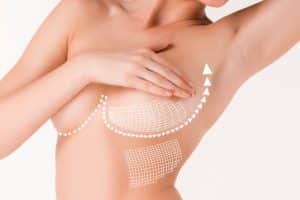
For relatively mild lifting, an incision around the areola may sometimes be considered.
When more skin needs to be removed, a vertical scar extending from the areola toward the breast fold may be required.
More extensive lifting can involve an additional horizontal incision within the breast fold.
The purpose of these different patterns is not simply to create scars of different lengths. Each provides a different amount of access for removing skin and reshaping breast tissue.
A shorter scar cannot always produce the necessary correction in a significantly drooping breast.
During consultation, Dr. Ömer Parıldar can explain which incision pattern may be suitable and why.
The patient should understand the likely scar arrangement before making a decision.
How Is the Existing Breast Tissue Reshaped?
Breast lifting involves more than removing loose skin.
The existing breast tissue can be repositioned internally to create a more supported contour.
The nipple and areola are moved to a higher position while maintaining their relationship with living breast tissue.
How the internal tissue is shaped depends on the technique and individual anatomy.
In some patients, the existing lower breast tissue can be redistributed to improve contour without adding an implant.
However, the ability to create upper-breast fullness from natural tissue has anatomical limits.
The amount of tissue present, its quality and the strength of the skin envelope all affect what is possible.
This is why photographs of another patient cannot be used as a precise prediction of your own result.
Can Fat Transfer Be Considered?
Some patients who do not want implants ask whether their own fat can be used to add a modest amount of breast volume.
Fat transfer is different from both implant augmentation and a standard lift.
Fat is removed from another area of the body using liposuction, prepared and then injected into selected areas of the breast.
Not all transferred fat survives permanently, so the final retained volume can be less than the amount initially injected.
The amount of enlargement achievable is also generally more limited than with implants.
Fat transfer may be considered in selected patients when a modest volume adjustment is desired, but it is not necessary for every breast lift.
If a patient wants to avoid both implants and fat transfer, breast lifting can still be performed using existing breast tissue alone.
The appropriate approach should be decided according to the patient’s goals and anatomy.
Why Scar Placement Deserves Attention
Every surgical breast lift creates scars.
The exact pattern depends on the amount of skin removal and reshaping required.
Scars commonly develop around the areola and may extend vertically toward the breast fold. More extensive procedures can include a scar within the fold as well.
During the first months, these scars can be pink, red, firm or more visible than expected.
Scar maturation is gradual.
Over time, many scars soften and fade, although they remain permanent.
The final appearance varies between patients.
Genetics, skin type, wound tension, infection, smoking and individual healing tendencies can influence scar quality.
Ask Dr. Ömer Parıldar where the scars are expected to sit and how they may look at different stages of recovery.
A patient considering a lift should feel that the expected change in breast shape is worth accepting the scars required to achieve it.
Nipple Sensation After Surgery
Changes in nipple or breast sensation can occur following lifting surgery.
Some patients experience temporary numbness. Others describe increased sensitivity during early healing.
Sensation can gradually improve as tissues recover, but permanent changes are possible.
The risk can vary according to the amount of lifting and the surgical technique.
This is particularly relevant when the nipple must be moved a considerable distance.
Patients should discuss sensation before surgery rather than assuming that it will always remain exactly the same.
Dr. Ömer Parıldar can explain how the proposed operation relates to the patient’s anatomy and planned nipple repositioning.
Breastfeeding After a Breast Lift
Many patients considering breast surgery are concerned about future breastfeeding.
A breast lift may affect breastfeeding ability, although the degree varies according to the surgical technique and the patient’s individual anatomy.
Some women can breastfeed after surgery, while others may have reduced milk production.
Pregnancy itself can also change the surgical result because breast volume can increase and decrease again after breastfeeding.
If having children is an important future plan, discuss this during consultation.
A patient may choose to have surgery while accepting the possibility of later breast changes, or may decide to wait until pregnancies are complete.
There is no single correct choice for everyone.
The important point is to make the decision with an understanding of the possible long-term changes.
Breast lift without implants: Recovery
Recovery after Breast lift without implants generally involves swelling, bruising, temporary tightness and some discomfort around the breasts.
The breasts may initially look higher and firmer than anticipated.
This early position changes as swelling decreases and the tissues settle.
A supportive postoperative bra may be recommended.
The type of bra and how long it should be worn depend on the surgical plan.
Patients should avoid using very tight garments unless specifically advised because greater compression does not automatically produce a better result.
Gentle walking is generally encouraged when medically appropriate.
Heavy lifting and strenuous upper-body activity should be limited during early healing.
If you have young children, organise help with lifting before surgery.
Repeatedly lifting a child can place significant strain on healing breast incisions even when you otherwise feel comfortable.
Follow-up appointments allow Dr. Ömer Parıldar to assess the wounds, swelling and developing breast shape.
Returning to Work
The time needed away from work depends on both the operation and the patient’s occupation.
Desk-based work generally places fewer physical demands on the chest than employment requiring repeated lifting or arm movements.
However, office work still includes commuting, carrying bags and maintaining a working posture for several hours.
Discuss your actual daily responsibilities rather than describing your job only by title.
A patient working from home may have more flexibility, but rest and movement restrictions still need to be respected.
Driving should resume only when you can move comfortably enough to control the vehicle safely and are no longer taking medication that interferes with alertness.
It is useful to build some flexibility into your schedule instead of treating one specific date as a guaranteed return to normal activity.
Exercise and Gym Training
Physical activity should be reintroduced gradually.
Walking is generally one of the first forms of exercise resumed after surgery.
Activities involving bouncing, heavy resistance or substantial upper-body movement require more healing time.
Running and high-impact exercise may place repeated movement on healing breasts.
Upper-body weight training can place tension through the chest and shoulder region.
Ask specifically about the exercises you normally perform.
A patient who practices yoga may need different guidance from someone whose routine focuses on weightlifting.
Feeling comfortable does not necessarily mean internal healing is complete.
Progressive return to exercise helps protect the surgical result while allowing the body time to recover.
Possible Risks and Complications
Breast lifting is an operation and therefore carries potential risks.
Bleeding, infection, fluid accumulation and delayed wound healing can occur.
Changes in breast or nipple sensation are possible.
The incisions can heal differently on the two breasts, and scars may become more visible than expected.
Partial skin or tissue-healing problems can occur, particularly when blood supply is compromised.
Smoking can increase wound-healing difficulties and should be discussed before treatment.
Residual asymmetry is possible even when considerable effort is made to improve breast balance.
Changes in nipple position or breast contour can also develop as tissues settle.
Blood clots and anaesthetic complications are additional risks associated with surgery more generally.
Patients should know how to recognise symptoms requiring medical assessment.
Increasing redness, worsening pain, concerning discharge or fever should be reported.
Sudden chest pain, severe breathlessness or collapse requires emergency medical attention.
Understanding complications is an essential part of informed decision-making.
How Will the Breast Change Over Time?
A breast lift can create a long-lasting improvement in position, but it does not stop the biological ageing process.
Gravity continues to act on the breast after surgery.
The skin also continues to change with age.
Weight fluctuations can affect breast volume and alter the amount of skin looseness.
Pregnancy may create more substantial changes.
Maintaining a relatively stable weight can help support the result.
Good long-term expectations also require recognising that the breasts will gradually settle following surgery.
The appearance at two weeks is not the final appearance at several months.
Scars also mature on their own timetable and often continue changing long after swelling has subsided.
Breast lift without implants in Istanbul
Patients considering Breast lift without implants in Istanbul with Dr. Ömer Parıldar should plan the process around consultation, surgery and appropriate postoperative follow-up.
If you are travelling from another city or country, mention this before scheduling treatment.
Ask how long you should remain locally and which follow-up examinations are expected before departure.
A short holiday-style schedule may not leave enough flexibility for recovery.
You may temporarily have restrictions on carrying luggage, lifting heavy bags or performing strenuous activities.
Travelling with someone who can assist during the early period can be helpful.
Before returning home, understand how follow-up will continue.
Know which concerns can be discussed remotely and which symptoms require an in-person medical examination.
Your travel plans should adapt to your medical recovery rather than forcing recovery to fit a fixed flight date.
How Is the Cost Determined?
The cost of surgery depends on the individual treatment plan.
The amount of lifting required, surgical technique, operating time, anaesthesia and hospital arrangements can all influence the overall treatment.
Preoperative examinations, postoperative garments and scheduled follow-up may also form part of the cost.
If fat transfer or another procedure is being considered at the same time, clarify whether it is included separately.
Ask for an understandable explanation of the treatment estimate.
You should know which services are included before deciding whether to proceed.
The financial discussion is most meaningful after the clinical plan has been established.
A lower price does not necessarily mean that a shorter or simpler technique is suitable for the patient’s degree of breast laxity.
Questions to Bring to the Consultation
Prepare your questions before meeting Dr. Ömer Parıldar.
Ask whether your existing breast tissue is sufficient to create the shape you want without implants.
Ask which incision pattern is being considered.
Discuss how much the nipple is likely to be repositioned.
Ask about possible changes in nipple sensation.
If future breastfeeding matters to you, include that in the discussion.
Find out what the breast is expected to look like after swelling decreases rather than focusing only on the immediate postoperative appearance.
Ask when you may return to work, driving and exercise.
Discuss how follow-up is organised and what would happen if part of an incision healed more slowly than expected.
Most importantly, explain your desired degree of fullness clearly.
Saying that you want a lift but do not want your breasts to look significantly larger provides useful information for surgical planning.
Dr. Ömer Parıldar
For selected patients, Breast lift without implants can reshape and reposition the natural breast without introducing an implant. The suitability of this approach depends on the amount of existing breast tissue, degree of sagging, skin quality, nipple position and the appearance the patient would like to achieve.
Dr. Ömer Parıldar evaluates these factors individually and discusses the type of lift that may be appropriate for the patient’s anatomy.
You do not need to know which incision pattern or technique you require before the consultation. Begin by explaining what has changed in your breasts, what concerns you and what you would prefer to preserve.
A carefully planned consultation allows you to understand the likely breast shape, scars, recovery process and limitations before making your decision.
Contact Dr. Ömer Parıldar
Telephone: +90 546 198 81 35
WhatsApp: +90 546 198 81 35
Email: info@dromerparildar.com
Address:
Basınköy, Florya Cd. No:15-17
34153 Bakırköy / İstanbul
Contact Dr. Ömer Parıldar to arrange an individual consultation and discuss a natural breast reshaping plan based on your existing tissue, proportions and personal expectations.
İlgili bağlantı: https://www.dromerparildar.com/iletisim/
İlgili bağlantı: https://www.instagram.com/dromerparildar/
Articoli correlati
Scopri altri approfondimenti dedicati ad argomenti simili.