Tummy tuck after bariatric surgery
Tummy tuck after bariatric surgery may be considered when substantial weight loss has changed the size of the abdomen but loose skin, folds and altered abdominal contours remain. Dr. Ömer Parıldar evaluates these concerns individually, taking into account the patient’s weight-loss history, current weight stability, previous operations, abdominal skin quality and expectations. For people who have completed a major weight-loss journey, the purpose of the procedure is not to continue weight reduction but to address selected tissues that may not contract sufficiently on their own.
Bariatric surgery can produce significant changes throughout the body. As abdominal volume decreases, the skin that previously accommodated a larger body size may not fully retract. In some patients, loose tissue is concentrated below the navel. In others, the laxity extends across the entire abdomen, toward the waist or around the sides of the body.
These changes can affect more than appearance. A heavy lower abdominal fold may rub during movement, make certain clothing uncomfortable or create difficulties with skin care. Some patients are mainly concerned with the way their abdomen looks after weight loss, while others are seeking relief from practical problems in daily life.
For this reason, abdominal contouring should begin with an individual assessment rather than a standard surgical formula.
Tummy tuck after bariatric surgery: When can it be considered?
The timing of Tummy tuck after bariatric surgery is an important part of treatment planning. Major weight-loss surgery is followed by a period in which body weight can continue changing for many months. Performing abdominal contour surgery while significant weight loss is still occurring may affect the final contour and make it difficult to predict how much tissue should be removed.
A relatively stable weight is therefore generally preferred before elective body contouring is planned. Stability does not mean that the number on the scale must remain identical every day. Normal fluctuations can occur. The more important question is whether major ongoing weight reduction is still expected.
During a consultation, Dr. Ömer Parıldar can review how your weight has changed recently and whether the body has reached a suitable stage for further surgery.
Overall health matters just as much as weight stability. A history of diabetes, cardiovascular conditions, clotting disorders, anaemia or wound-healing problems can influence surgical planning. Previous bariatric procedures can also affect nutritional absorption, which makes nutritional assessment particularly relevant.
Smoking is another important consideration because nicotine can reduce blood flow to healing tissues. Patients who smoke should discuss this openly during their medical assessment rather than attempting to hide or minimise tobacco use.
Future pregnancy plans may also affect timing. Pregnancy can stretch the abdominal tissues again and alter the result of previous contouring surgery. If pregnancy is planned in the near future, postponing elective abdominal surgery may be appropriate.
There is no need to decide all of these issues alone. The consultation is the place to establish whether the timing is suitable or whether additional preparation would be more sensible first.
Why Does the Abdomen Change So Much After Weight Loss?
The abdominal skin expands gradually during weight gain. When body volume decreases substantially, that skin does not necessarily contract at the same rate.
Several factors influence how much looseness remains. Age affects skin elasticity, but it is not the only factor. Genetics, pregnancy history, the amount of previous weight gain, the duration of obesity, the total amount of weight lost and individual tissue quality can all contribute.
Some patients develop a lower abdominal apron known as a pannus. Others experience laxity both vertically and horizontally, creating excess tissue across several dimensions.
The abdominal wall itself may also have changed independently of the skin. Previous pregnancy, large changes in abdominal volume and individual anatomy can contribute to separation or weakening of the abdominal muscles.
This is why exercise and surgery address different problems. Strengthening the abdominal muscles can improve fitness and core function, but exercise cannot remove a substantial fold of excess skin.
Likewise, continuing to lose weight does not guarantee that the loose skin will disappear. Once a patient has achieved a healthy and sustainable weight, further weight loss solely in an attempt to remove skin may not produce the desired change.
Tummy tuck after bariatric surgery: What can be treated?
The surgical plan for Tummy tuck after bariatric surgery depends on the location and amount of excess tissue. The term “tummy tuck” can describe several approaches, and the most appropriate method is determined by the individual anatomy rather than by preference for the smallest possible incision.
A traditional abdominoplasty typically removes loose skin from the lower abdomen while allowing the remaining abdominal skin to be repositioned. The navel usually remains attached to its underlying tissues and is brought through a new opening in the repositioned skin.
When appropriate, abdominal muscle separation may also be addressed during surgery. This aspect of treatment is decided after clinical examination and should not be assumed to be necessary in every patient.
Patients who have lost very large amounts of weight sometimes have more extensive laxity than patients seeking abdominoplasty after pregnancy or moderate weight change. In these cases, additional techniques may be considered.
A fleur-de-lis abdominoplasty is one example. It includes both horizontal and vertical tissue removal and can address excess skin in more than one direction. The trade-off is an additional vertical abdominal scar.
For patients whose loose tissue extends around the sides and toward the back, abdominal surgery alone may not address the full pattern of laxity. Broader body contouring procedures may therefore be discussed.
Dr. Ömer Parıldar assesses where the redundant tissue begins and ends before recommending an operation. The goal is to match the procedure to the actual anatomy rather than to perform a larger operation simply because substantial weight loss has occurred.
The Difference Between a Tummy Tuck and Pannus Removal
Patients sometimes use the terms tummy tuck and excess-skin removal interchangeably, although the procedures can have different aims.
A panniculectomy focuses primarily on removing the overhanging apron of skin and tissue from the lower abdomen. This may be particularly relevant when the fold interferes with hygiene, movement or clothing.
A full abdominoplasty usually involves broader reshaping of the abdomen. It can address additional skin laxity above the lower fold and may include abdominal wall tightening where appropriate.
The distinction matters when discussing expectations.
If the main goal is removal of a heavy lower fold, the required approach may differ from that of a patient seeking a more extensive change in abdominal contour.
Ask during your consultation exactly which tissues would be removed and what parts of the abdomen would remain largely unchanged. Knowing what the proposed operation does not address is as important as understanding what it is intended to change.
Nutrition Has a Direct Role in Surgical Planning
Patients who have undergone bariatric surgery require particular attention to nutritional status.
Certain bariatric procedures can reduce the absorption of vitamins, minerals and nutrients. Even when a person feels well and maintains a stable weight, deficiencies may still be present.
Protein is especially important for tissue repair. Iron, vitamin B12, folate and other nutrients may also require assessment depending on the type of bariatric procedure and the patient’s medical history.
Preoperative blood tests may therefore form part of the evaluation.
If deficiencies are identified, surgery may need to be postponed until they have been addressed. This is not an unnecessary delay. Creating the best possible conditions for wound healing is an important part of elective surgical preparation.
Patients should inform Dr. Ömer Parıldar about all supplements they are currently taking, including products purchased without a prescription.
Do not start high-dose supplements independently before surgery. More is not always better, and some products can interact with medications or affect bleeding.
How Are Scars Planned?
A tummy tuck cannot remove substantial excess abdominal skin without creating a scar.
The main scar usually extends across the lower abdomen. Its exact length depends on how much tissue must be removed and how far the looseness extends toward the sides.
One of the most useful discussions before surgery is where this scar is likely to sit in relation to underwear and clothing.
For many patients, Tummy tuck after bariatric surgery involves a longer incision than they originally expected because major weight loss can produce more extensive skin laxity. Trying to force a large correction through an incision that is too short can limit the result or create undesirable tension.
Scars initially tend to look more noticeable than they will after complete maturation. They may appear pink, red, firm or raised during the early stages of recovery.
Over time, many scars gradually soften and fade. This process can continue for a year or longer.
Individual healing varies, however. Genetics, skin characteristics, wound tension, infection, smoking and other factors can affect scar appearance.
The appropriate question is therefore not whether surgery can be performed without a scar, but whether the expected contour change is acceptable in exchange for the scar required to achieve it.
What Happens on the Day of Surgery?
Abdominoplasty is generally performed under general anaesthesia.
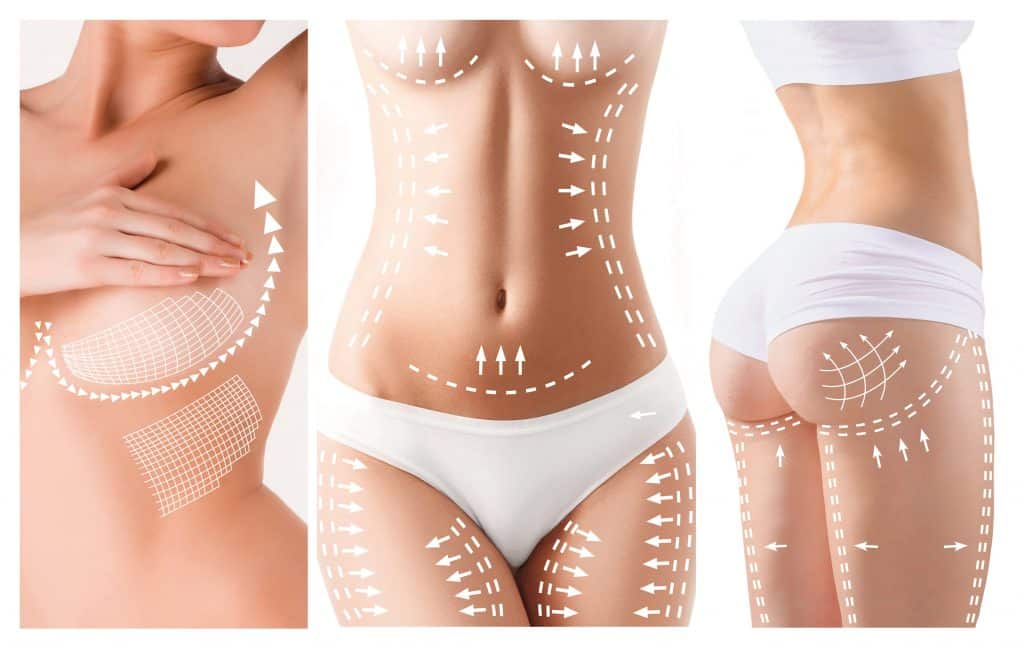
Before surgery begins, the planned areas of skin removal are marked while the patient is in an appropriate position. These markings help guide the procedure because body contours change when a person lies down.
During the operation, the surgeon removes the planned excess skin and associated tissue. Depending on the chosen technique, the abdominal skin is repositioned and the navel may be brought through a new opening.
Where appropriate, abdominal wall repair can also be performed.
The incisions are then closed carefully. Dressings are applied, and a compression garment may be recommended.
Temporary drains may be used in some cases to reduce fluid accumulation beneath the skin. Surgical techniques vary, so not every patient will necessarily have drains.
If drains are planned, the medical team should explain how they are cared for and when removal is usually considered.
Tummy tuck after bariatric surgery: Recovery
Recovery after Tummy tuck after bariatric surgery should be planned before the operation rather than treated as an afterthought. Major abdominal surgery affects mobility, posture and the ability to perform ordinary household activities during the early healing period.
Swelling and bruising are expected initially. The abdomen may feel tight, and standing completely upright can be uncomfortable for a period.
Pain and discomfort are managed according to the treatment plan established by the surgical team.
Patients are usually encouraged to begin gentle walking when medically appropriate. Early movement supports circulation and reduces the problems associated with remaining completely immobile.
At the same time, heavy lifting and strenuous physical activity must be avoided until sufficient healing has occurred.
It is useful to arrange help at home before surgery. Shopping, cleaning, childcare and lifting heavy objects may not be practical during the early recovery period.
Clothing should also be considered. Loose, easy-to-put-on garments can make the first days more comfortable.
Your follow-up schedule will allow Dr. Ömer Parıldar to assess the wounds, swelling and overall healing progress.
Recovery does not happen at exactly the same speed for everyone. A larger operation, nutritional factors, general health and individual healing response can all influence the timetable.
Returning to Work
The amount of time needed away from work depends partly on what your job actually involves.
A person working at a computer has different physical requirements from someone whose job involves lifting, bending, driving for long periods or standing throughout the day.
Even desk work can be demanding early in recovery because prolonged sitting and commuting may be uncomfortable.
A planning period of several weeks is common after abdominoplasty, but patients should follow individual medical guidance rather than treating a general estimate as a guaranteed return date.
If possible, discuss flexible working arrangements before surgery.
A gradual return may be easier than immediately resuming full-length working days.
Exercise After Abdominal Contouring
Exercise should return gradually.
Walking is usually one of the first activities reintroduced because it encourages circulation without placing the same strain on healing tissues as resistance training.
Heavy weightlifting, intense abdominal exercises and high-impact activities require more time.
A patient who was highly active before surgery should not assume that excellent fitness allows the normal training schedule to resume immediately. Internal tissues need time to heal regardless of previous fitness level.
Ask specifically about the activities you enjoy.
Running, swimming, cycling, weight training and yoga place different stresses on the abdominal area, so returning to each activity may require different timing.
The aim is not simply to return to exercise quickly. It is to return without unnecessarily compromising healing.
Possible Risks and Complications
Abdominoplasty is a substantial surgical procedure and carries potential complications.
These can include bleeding, infection, fluid accumulation, delayed wound healing and changes in skin sensation.
Seroma, which is a collection of fluid beneath the skin, can occur after abdominal contouring and may require monitoring or treatment.
Areas of numbness can also develop because small sensory nerves are affected when the skin is lifted and repositioned. Sensation can improve gradually, although some changes may persist.
Scars can heal differently from one person to another. They may become wider, darker, raised or uneven.
Asymmetry or contour irregularities are also possible.
More serious complications can include blood clots and problems related to anaesthesia.
Patients should receive clear information about warning signs before leaving the treatment facility.
Increasing redness, significant wound discharge, fever or rapidly worsening pain should be reported for medical assessment.
Sudden shortness of breath, chest pain or symptoms suggesting a blood clot require urgent medical attention.
Understanding these possibilities is a necessary part of informed consent.
What Results Can You Expect?
The abdominal contour changes immediately when excess tissue is removed, but the early postoperative appearance should not be considered the final result.
Swelling can conceal the final shape for weeks or months.
Scar maturation takes longer.
Patients who maintain a relatively stable weight are more likely to preserve the abdominal contour achieved through surgery.
Major future weight changes can stretch the tissues again.
Ageing also continues naturally after surgery, meaning some loss of skin firmness can develop over time.
A tummy tuck cannot guarantee perfect symmetry, remove every stretch mark or create a specific body shape seen in another person.
The most useful expectations are personal and measurable.
You might want an abdominal fold reduced so that clothing fits differently. You may want the lower abdomen to feel less heavy. Your priority might simply be a contour that better reflects the weight you have already lost.
These goals can be discussed clearly during your consultation with Dr. Ömer Parıldar.
Can Other Procedures Be Performed at the Same Time?
Major weight loss often affects several areas of the body.
Loose skin may also be present on the arms, thighs, breasts, chest or lower body. It is therefore common for patients to ask whether several areas can be treated during one operation.
The answer depends on the procedures involved, overall health, expected operating time and recovery demands.
Combining operations is not automatically the better option.
A longer and more extensive operation can create a more demanding recovery. In some cases, dividing treatment into stages may be more appropriate.
Dr. Ömer Parıldar can help establish which area should be prioritised and whether additional procedures should be planned separately.
Patients should not feel obligated to correct every area of loose skin after weight loss. Treating one area that creates the greatest concern can be a complete treatment decision in itself.
What Influences the Cost?
The cost of surgery depends on the individual treatment plan.
A standard abdominoplasty and a more extensive post-weight-loss procedure can involve different operating times, hospital requirements and levels of correction.
Anaesthesia, hospital facilities, medical examinations, garments and postoperative care may also contribute to the total.
For this reason, Tummy tuck after bariatric surgery should be priced after assessment rather than treated as a single standard package.
Ask what is included in the proposed treatment estimate.
You should understand whether the quotation covers hospital care, anaesthesia, follow-up appointments and postoperative garments.
If an additional procedure such as liposuction is being considered, establish whether it is included or listed separately.
Clear financial information should support the clinical plan rather than determine it.
Tummy tuck after bariatric surgery in Istanbul
Patients considering Tummy tuck after bariatric surgery in Istanbul with Dr. Ömer Parıldar should plan their stay around the medical process rather than around a short travel timetable.
If you are travelling from another city or country, explain this before scheduling surgery.
The team can then discuss how long you may need to remain locally for early postoperative assessment.
Do not choose a return flight before understanding the expected recovery schedule.
Long journeys shortly after surgery require particular consideration because reduced mobility and recent surgery can both contribute to blood-clot risk.
You should also determine who will accompany you during the initial recovery period.
Carrying luggage, navigating airports or travelling alone immediately after abdominal surgery may be difficult and should not be underestimated.
Before returning home, make sure you understand how subsequent follow-up will be managed.
You should know who to contact for routine questions, when an in-person examination is required and where to seek urgent medical care if necessary.
Questions Worth Bringing to Your Consultation
A well-prepared consultation gives you the opportunity to understand the proposed operation in practical terms.
Ask which type of abdominoplasty is being considered and why.
Ask how long the expected scar will be and where it is likely to sit.
Find out whether muscle repair is recommended and what finding supports that recommendation.
Discuss whether liposuction forms part of the plan.
Ask about hospital stay, anaesthesia and expected early mobility.
Clarify how long you may need help at home.
Discuss when you may realistically return to your particular occupation.
Ask when driving, exercise and lifting can resume.
If you previously had difficulty healing after surgery, mention it.
If you have concerns about nutritional deficiencies, discuss them openly.
There is no need to limit yourself to questions about the appearance of the result. Recovery, complications, aftercare and practical organisation are equally important parts of the decision.
Dr. Ömer Parıldar
Tummy tuck after bariatric surgery can be the next stage of body contouring for selected patients who have completed substantial weight loss but continue to experience excess abdominal skin. The decision should be based on individual anatomy, general health, weight stability, nutritional condition and realistic expectations rather than on a standard treatment formula.
Dr. Ömer Parıldar can evaluate the abdominal tissues, review your previous weight-loss and surgical history and discuss what type of correction may be appropriate for your circumstances.
You do not need to arrive at the consultation having chosen a technique. Begin by explaining what bothers you, how the abdominal skin affects your daily life and what kind of change you hope to achieve.
A carefully planned consultation allows you to understand the scars, recovery period, limitations and expected changes before deciding whether surgery is the right step for you.
Contact Dr. Ömer Parıldar
Telephone: +90 546 198 81 35
WhatsApp: +90 546 198 81 35
Email: info@dromerparildar.com
Address:
Basınköy, Florya Cd. No:15-17
34153 Bakırköy / İstanbul
Contact Dr. Ömer Parıldar to arrange an individual consultation and discuss a carefully planned approach to abdominal contouring after significant weight loss.
İlgili bağlantı: https://www.dromerparildar.com/iletisim/
İlgili bağlantı: https://www.instagram.com/dromerparildar/
Articoli correlati
Scopri altri approfondimenti dedicati ad argomenti simili.